How Imaging Radar helps in secondary Screening
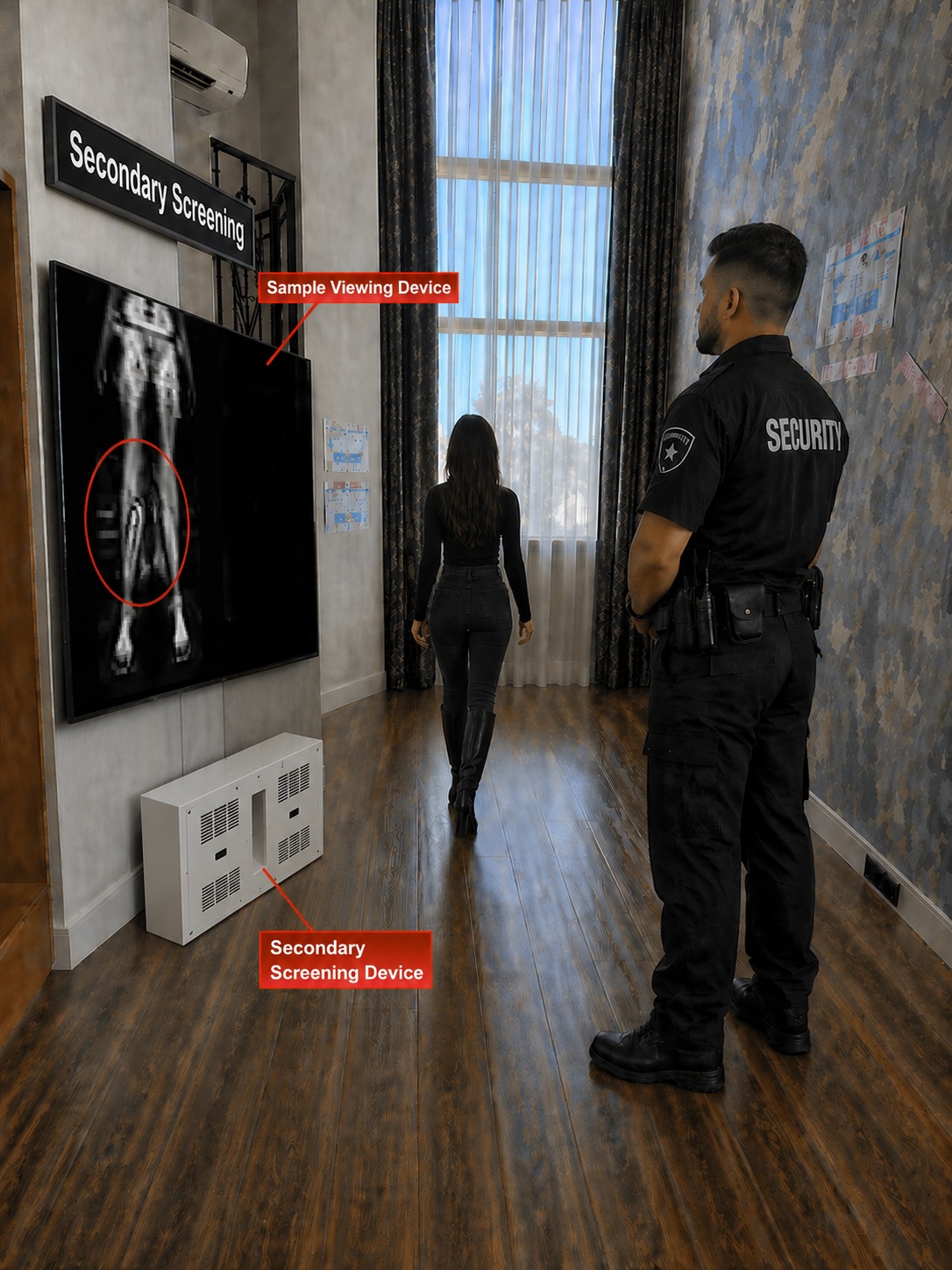
The Secondary Screening system utilizes Imaging Radar (similar to millimeter-wave technology) to provide a high-resolution visual of concealed items. Unlike traditional metal detectors that only "beep," this Secondary Screening solution creates a digital map of objects hidden under clothing, in boots, or inside bags. By using non-ionizing radiation, the system is completely safe for humans; the waves bounce off the skin (which is mostly water) to reveal the shape and material of any hidden objects without penetrating the body.
Why is imaging radar better than a traditional hand wand?
Hand wands have not fundamentally changed since the 1970s and are highly prone to human error.
The "Steel-Tip" Loophole: Guards often stop scanning at the knees because they assume an alert is just a steel-toed boot. Athena’s Secondary Screening radar system allows guards to see through the boot material to distinguish between the shoe's structural steel and a hidden weapon.
Physical Fatigue: Hand Wanding requires guards to bend and reach, leading to "lazy scanning." This system allows for a "walk-past" scan of the feet and bags in seconds.
Does this require guests to remove their shoes or boots?
No. The Secondary Screening imaging radar penetrates leather, rubber, and fabric. It identifies the density and shape of the metal or object itself, meaning users can keep their boots on—even steel-toed ones—while the system verifies there are no weapons concealed inside.
How does it improve bag screening?
Manual bag checks are slow and often incomplete. In fast-paced environments, a guard may only check 4 out of 15 pockets or stop searching once they find a minor item like a pocketknife, missing a more dangerous secondary threat.
Total Visibility: The Secondary Screening system scans the entire bag in seconds without needing to unzip a single pocket.
Speed: The Secondary Screening solution eliminates the need for manuel search a bag; a quick scan reveals all contents instantly, preventing line bottlenecks.
Is the Secondary Screening technology safe for everyone?
Yes. The Secondary Screening solution uses non-ionizing radiation, which does not have enough energy to damage DNA or cells. Because these waves do not penetrate past water, they stay on the surface of the human body. It is safe for pregnant women, children, and individuals with pacemakers.
How does this prevent weapons from entering high-traffic areas?
By removing the "human weakest link," the system ensures every secondary search is as thorough as the first. It eliminates the "excuse factor" (like claiming a belt or shoe is the cause of an alert) by providing security staff with a clear visual confirmation of what is actually being carried.
How does the Athena Secondary Screening unit work?
The unit is a compact system that sits flush to the ground. To scan the feet, a person simply stands in front of the unit and turns each foot to the side. This allows the imaging radar to capture both sides of the footwear. For bags, the user simply spins the bag in front of the sensors. The system then uses non-ionizing imaging radar to "see through" the bag or shoe material to identify hidden weapons in seconds.
How does it scan bags without opening them?
Manual bag checks are slow and prone to "search fatigue," where guards may miss a weapon after finding a smaller item like a knife. With Athena’s solution:
The radar provides a high-resolution visual of the bag's entire contents in seconds.
Security can clear a bag with 15+ pockets just by having the visitor spin the bag in front of the unit.
It eliminates the need for guards to unzip pockets or touch personal belongings, maintaining a frictionless experience.
Was this article helpful?
That’s Great!
Thank you for your feedback
Sorry! We couldn't be helpful
Thank you for your feedback
Feedback sent
We appreciate your effort and will try to fix the article