Frequently Asked Questions About Athena’s Secondary Screening WDS™ System
Athena’s Secondary Screening WDS™ solution helps security teams conduct efficient, respectful, and high-accuracy secondary screening for visitors, employees, students, and guests in high-traffic environments. This FAQ page is designed to answer common questions about Athena’s secondary screening process, Weapons Detection System (WDS™), compliance considerations, operational workflows, and deployment best practices.
What is Athena Secondary Screening WDS™?
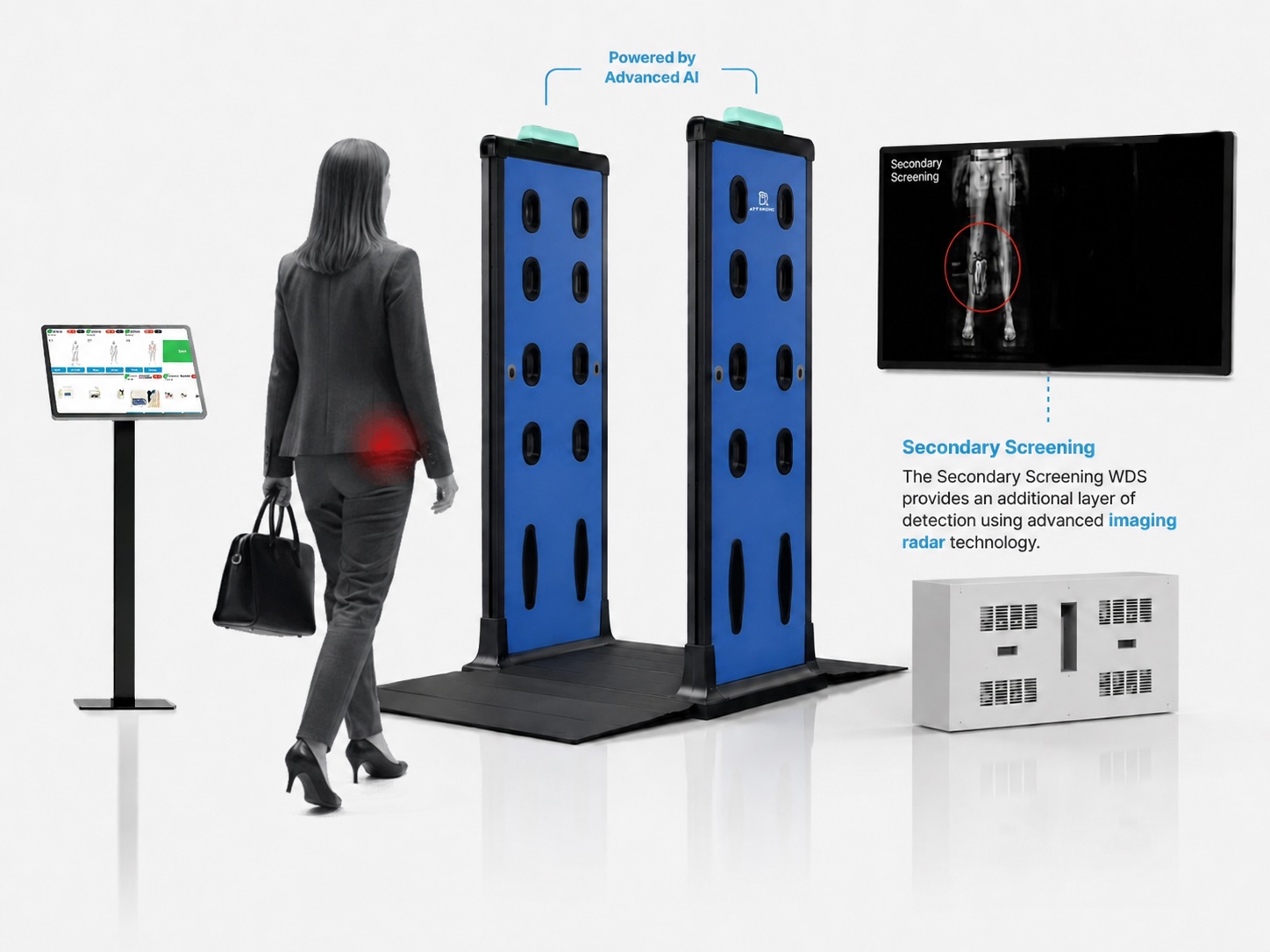
Athena Secondary Screening WDS™ is a secondary screening workflow and concealed weapons detection solution designed to help security teams quickly and safely resolve alarms or alerts generated during entry screening. The secondary screening weapons detectoin system supports a streamlined process for identifying potential threats while minimizing delays and maintaining a positive visitor experience.
Athena’s Secondary Screening WDS™ technology integrates with broader security operations including visitor management, Apollo WDS, Ai Assisted X-Ray baggage scanner access control, and entryway screening systems.
How does Athena’s secondary screening process work?
Athena’s secondary screening weapons detection process is activated when the initial screening system identifies a potential item of concern. Once an alert is triggered, security personnel use Athena’s Secondary Screening WDS™ workflow to conduct targeted follow-up screening quickly and efficiently.
Typical steps include:
- Boot and Shoe Scan:
If the initial alert indicates a concern in the lower body or feet area, the visitor steps in front of the Secondary Screening WDS™. The system automatically scans for potential weapons concealed beneath clothing or within footwear without requiring physical contact. - Bag Scan:
The visitor’s bag is placed in front of the Secondary Screening WDS™ device. The security officer rotates the bag in front of the scanner, allowing the system to inspect the contents without opening zippers or searching through pockets manually.
This streamlined process helps reduce screening bottlenecks while enhancing overall security effectiveness and maintaining a smooth visitor experience.
What does WDS stand for?
WDS stands for Weapons Detection System. Athena’s WDS solutions are designed to help security operators detect potential concealed weapons and support efficient screening procedures.
Where can Athena Secondary Screening WDS™ be deployed?
Athena Secondary Screening WDS™ can be deployed across a wide range of industries and facilities, including:
- Schools and universities
- Hospitals and healthcare facilities
- Stadiums and arenas
- Corporate offices
- Government buildings
- Transportation hubs
- Entertainment venues
- Manufacturing facilities
- Critical infrastructure sites
- Event venues
The solution is designed for environments that require secure, high-throughput entry screening with low touch.
What are the benefits of Athena’s secondary screening WDS workflow?
Key benefits include:
Faster Threat Resolution
Athena secondary screening WDS™ helps security teams quickly assess alerts and determine appropriate next steps in the secondary screening area..
Improved Visitor Experience
The system supports efficient screening workflows that reduce unnecessary delays in secondary screeening area.
Enhanced Security Operations
Security personnel gain better visibility into alerts, screening activity, and operational performance.
Scalable Deployment
Athena’s secondary screening WDS workflows can support single-entry facilities or enterprise-wide deployments for secondary screening areas.
Integrated Security Ecosystem
The system can integrate with visitor management systems, access control systems, Apollo 500 WDS, AI Assisted X-Ray and security operations platforms.
What are the benefits of Athena’s secondary screening WDS workflow?
Key benefits include:
Faster Threat Resolution
Athena's Secondary Screening WDS™ helps security teams quickly assess alerts and determine appropriate next steps in a secondary screening area.
Improved Visitor Experience
The system supports efficient screening workflows that reduce unnecessary delays and customer interactions.
Enhanced Security Operations
Security personnel gain better visibility into alerts, screening activity, and operational performance on secondary screening.
Scalable Deployment
Athena’s secondary screening WDS workflows can support single-entry facilities or enterprise-wide deployments.
Integrated secondary screening WDS Security Ecosystem
The system can integrate with visitor management systems, access control systems, and security operations platforms.
Can Athena WDS™ support high-traffic venues?
Yes. Athena's Secondary Screening WDS™ is designed to support high-throughput environments such as stadiums, concerts, convention centers, and transportation facilities.
The workflow is optimized to help security personnel process secondary screening alerts efficiently while maintaining operational flow.
Is Athena Secondary Screening WDS™ suitable for schools?
Yes. Athena’s secondary screening WDS workflows can support K-12 schools, colleges, and universities that require secure yet welcoming campus entry procedures. Educational institutions often deploy Athena security solutions to help improve campus safety while minimizing disruption during student arrival periods, events, and visitor check-ins. No more opening bags or taking off shoes.
Why is secondary screening important?
Secondary screening is an important component of layered physical security strategies. It allows security personnel to investigate alerts more precisely and determine whether an item presents a threat.
Effective secondary screening helps organizations:
- Improve safety protocols
- Reduce false positives
- Maintain efficient visitor flow
- Support security compliance initiatives
- Increase confidence in entry screening operations
Was this article helpful?
That’s Great!
Thank you for your feedback
Sorry! We couldn't be helpful
Thank you for your feedback
Feedback sent
We appreciate your effort and will try to fix the article